

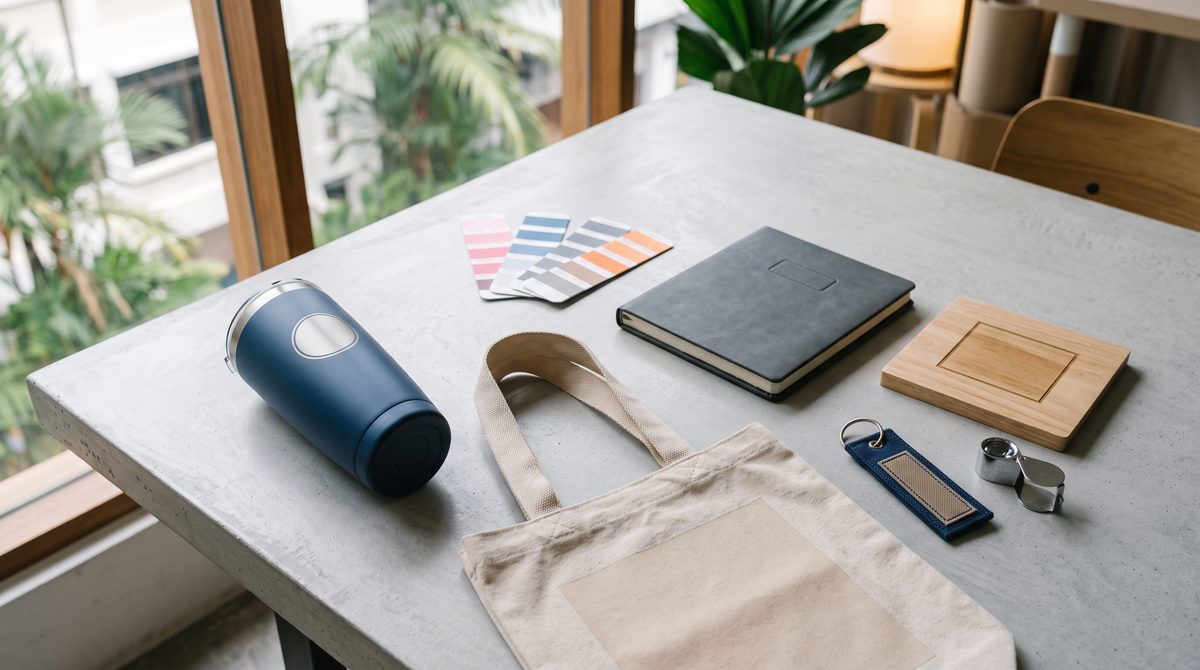
The main logo printing methods for corporate gifts are screen printing, UV printing, laser engraving, embossing or debossing, hot foil stamping, embroidery and heat transfer. The right choice depends on the material, the shape of the printing area, the number of colours in your logo and the finish you want, from bold full colour to a subtle tone-on-tone mark.
Why the branding method matters
Two identical tumblers can look completely different depending on how the logo is applied. A full-colour print feels bright and promotional, while an engraved logo looks understated and permanent. The method also affects how well the logo holds up to daily use, washing and handling. Choosing it early helps avoid redesigns at the proof stage.
At Ether Gifts, each product page lists the branding methods available for that item. With 1,000+ customisable gift items, the options vary widely, so this guide explains what each method looks like and where it works best. For the step-by-step order flow, see our customisation process page.
Logo printing methods for corporate gifts explained
Screen printing
Ink is pushed through a fine mesh screen onto the product, one colour at a time. It gives solid, opaque colour and is widely used on canvas bags, T-shirts, umbrellas and paper notebook covers. It works best for logos with a limited number of flat colours.
UV printing
UV printing applies ink that is cured instantly with ultraviolet light. It handles detailed and multi-colour artwork, including gradients, on surfaces such as plastic pens, acrylic keychains and coated drinkware. Many product pages list "UV/Screen Printing" together, meaning either method can be considered for that item.
Laser engraving
A laser removes a thin layer of the surface to create a permanent mark. On wood it produces a natural darker tone; on coated metal it reveals the metal underneath. The 24oz powder coated tumbler, for example, is listed with laser engraving or screen printing. Engraving is single-tone, so it suits logos that read well in one colour.
Embossing and debossing
The logo is pressed into the material with a heated or shaped plate, creating a raised or recessed mark without ink. It is common on PU leather notebooks, keychains and document bags. The leather zipper document bag is listed with debossing, a classic finish for executive gifts.
Hot foil stamping
Metallic foil, usually gold or silver, is transferred using heat and pressure. It is often combined with embossing on leather and paper. The A5 leather pen sleeve notebook lists screen printing, silver stamping, gold stamping and embossing, so one product can take several looks.
Embroidery
Thread is stitched into fabric to form the logo. It adds texture and a premium feel on caps, bucket hats, felt bags and fabric items such as the embroidered keychain. Very fine text and small details are simplified, because thread has a minimum thickness.
Heat transfer and other methods
Heat transfer, listed on some products as thermal transfer, prints the design onto a carrier film and then applies it with heat. It suits polyester fabric bags and items where direct printing is difficult. Other methods appear on specific products, such as stickers, jacquard weaving on ties and custom moulds for shaped PVC items.
Matching methods to materials
| Material | Typical products | Suitable logo methods | Notes |
|---|---|---|---|
| Stainless steel and coated metal | Tumblers, thermos mugs, metal keychains | Laser engraving, UV or screen printing | Engraving for a permanent single-tone mark; printing for brand colours |
| Wood and bamboo | Perpetual calendars, speakers, keychains | Laser engraving | Natural, tone-on-tone result |
| PU leather | Notebooks, card holders, document bags | Embossing, debossing, gold or silver foil stamping, printing | Pressed finishes suit premium and executive gifts |
| Plastic and acrylic | Pens, keychains, gadgets | UV printing, screen printing, laser engraving on some items | UV handles multi-colour and fine detail |
| Canvas and cotton | Tote bags, T-shirts, hats | Screen printing, UV printing, embroidery on hats | Large print area; flat colours print cleanly |
| Polyester and felt | Briefcases, felt bags, polo shirts | Screen printing, heat transfer, embroidery on felt | Check the listed method per product |
| Ceramic and paper | Mugs, calendars, notebooks | UV or screen printing, stickers, hot stamping on paper | Coated paper keeps colours sharp |
How to choose the right method
- Start with the logo: a multi-colour or gradient logo points to UV printing; a simple one-colour mark opens up engraving, embossing and foil.
- Consider the recipient: event giveaways usually need visible colour; client and executive gifts often look better with subtle engraving or debossing.
- Check the surface: curved, textured or soft surfaces limit the print area and detail.
- Think about use: items that are washed or handled daily benefit from durable finishes such as engraving or embroidery.
- Balance quantity and timing: quotes depend on product, quantity, branding method and delivery date, so compare options early.
Our custom logo corporate gifts guide covers logo placement and brand consistency in more detail. Whichever method you choose, print only logos your company owns or has permission to use, for example a sponsor's or partner's mark on co-branded gifts. The Intellectual Property Office of Singapore explains that a trade mark is a sign used to distinguish a business's goods or services from those of other traders, and that a registered trade mark is protected for 10 years from the date of filing.[1]
Artwork file tips
- Send vector files (AI, EPS, SVG or PDF) rather than screenshots or low-resolution images.
- Convert fonts to outlines so text prints exactly as designed.
- Provide brand colour references, such as Pantone codes, for colour matching.
- Prepare a single-colour or white version for engraving, embossing and dark products.
- Avoid very thin lines and tiny text, especially for embroidery and debossing.
- Review the proof for position, size, colour and spelling before approving.
If you need to see the finish before committing, our corporate gift samples guide explains when a physical sample is worth it.
Frequently Asked Questions
What is the best printing method for a logo on corporate gifts?
There is no single best method. UV printing suits colourful, detailed logos on plastic and coated surfaces; screen printing suits flat colours on fabric and paper; laser engraving suits metal and wood; embossing and foil stamping suit leather. The best choice depends on the material and the look you want.
What is the difference between screen printing and UV printing?
Screen printing applies each colour separately through a mesh screen and gives bold, opaque colour on flat areas. UV printing applies ink that is cured by ultraviolet light and handles fine detail and multiple colours, including gradients. Many products list both, and the logo design usually decides which one fits.
Is laser engraving better than printing on drinkware?
Laser engraving creates a permanent single-tone mark that will not peel, and it gives a refined look on stainless steel and powder-coated tumblers. Printing is the better choice when you need brand colours. Many tumblers on our site list both methods, so you can choose based on the design.
What is the difference between embossing and debossing?
Embossing raises the logo above the surface, while debossing presses it into the material. Both are done without ink, so the logo appears in the same colour as the material. They are popular on PU leather notebooks, card holders and document bags, and can be combined with gold or silver foil.
What file format do I need for logo printing?
Vector files such as AI, EPS, SVG or PDF are preferred because they scale without losing quality. Include your brand colour references and, if possible, a one-colour version for engraving or pressed finishes. A proof is prepared from your artwork for approval before production starts.
Not sure which finish suits your item? Browse all products to see the methods listed on each page, visit our printing methods page, or request a quote and share your logo for advice.
Last reviewed: 18 October 2026. This article was prepared by Ether Gifts as a general buying guide and does not constitute legal or regulatory advice.


